No victory at the 2022 World Cup has been more emphatic than when Brazil played South Korea in the round of 16. South Korea, giants in Asian soccer, were dismantled by a superiorly talented Brazilian team by a score of 4-1.
The most impressive feat of the game was how the Brazilians continued to one-up themselves with each goal they scored. Their South American trademarks of deft touch dribbling, quick precision passing, and masked shots were ferociously unleashed on the Korean defensive line.
The marquee goal was Richarlison’s fantastical three touches with his head before he scissored through the Korean defense.
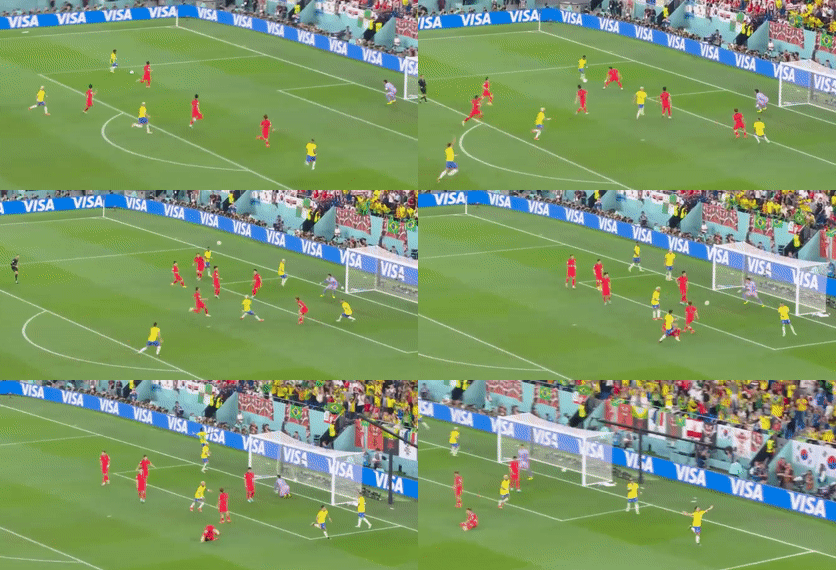
But the more underrated sequence, that gained less media sensation afterwards, was the fourth goal. Winger Vinícius Júnior perfectly chipped a pass across the box and over a pack of players right on to the boot of Lucas Paqueta.
It was a primary assist that was as sublime as it was silky.
The Importance of Creativity in Modern Soccer
The style of soccer that Brazil plays actually subject to rigorous scientific research. It’s referred to as tactical creativity.
Tactical creativity, according to German academic Daniel Memmert in the book Encyclopedia of Creativity, is defined as “the unusualness, innovativeness, statistical rareness, or even uniqueness of solutions to a related sport situation in team ball sports.”
Creativity in soccer is also known as divergent thinking, or finding a skill expression so unique that even the world’s best defenders are caught off guard.
In the age of information, being unpredictable with the ball is increasingly becoming more important for beating defenses. Soccer, like other major sports, is now overridden with information. Coaches will pour over formations and player tendencies to ensure their teams are prepared as possible. Divergent thinking on the spot is provides a pathway to beat sophisticated analytics.
Creativity = World Cup Success
Creative goals may not just be about aesthetics however; they may be directly related to winning games.
In a study titled ‘”Good, better, creative”: the influence of creativity on goal scoring in elite soccer,’ Memmert and his colleague Matthias Kempe studied all the goals scored in open play in the 2010 and 2014 World Cups and the 2016 Euro Cup. Overall, there were 311 goals scored in 153 games that they analyzed.
To assess a “creative” goal, the researchers analyzed the last 8 actions before a goal was scored. They had soccer experts rank on- and off-the-ball movements a give them a creativity score. Some interesting trends came out of the process.
Creative actions became more important closer to the goal being scored. But it was the 7th move, or the primary assist, that was found to be the most creative. The move before a goal was the most likely to be so unexpected and unpredictable that the defense could not adapt.
The research found that 52% of goals in the group stage were ‘highly creative.’ However, creativity was relatively rare to find in game play. Only 9.5% of the assessed moves were determined to have an above average creative rating.
Importantly, more successful teams had a greater proportion of creative goals. Successful teams were not only scoring more beautiful goals, they were scoring them when competition was at its fiercest. The authors concluded that “teams that advanced to the later rounds of the tournament demonstrated greater creativity than teams that failed to do so.”
How does a country develop a style of creative play?
The Korea vs. Brazil game represented a compelling dichotomy for winning and creativity. Brazil is historically the most successful national team on the World Cup stage (though they only lasted a round later than Korea until their quarter-final loss, a concerning trend in the 21st century).
Korea is the most successful program in Asian soccer history. Qatar was the 10th straight World Cup they qualified for. In that time, they’ve only won seven games. In their 38 total games at the world’s premier tournament, they’ve only scored 39 goals.
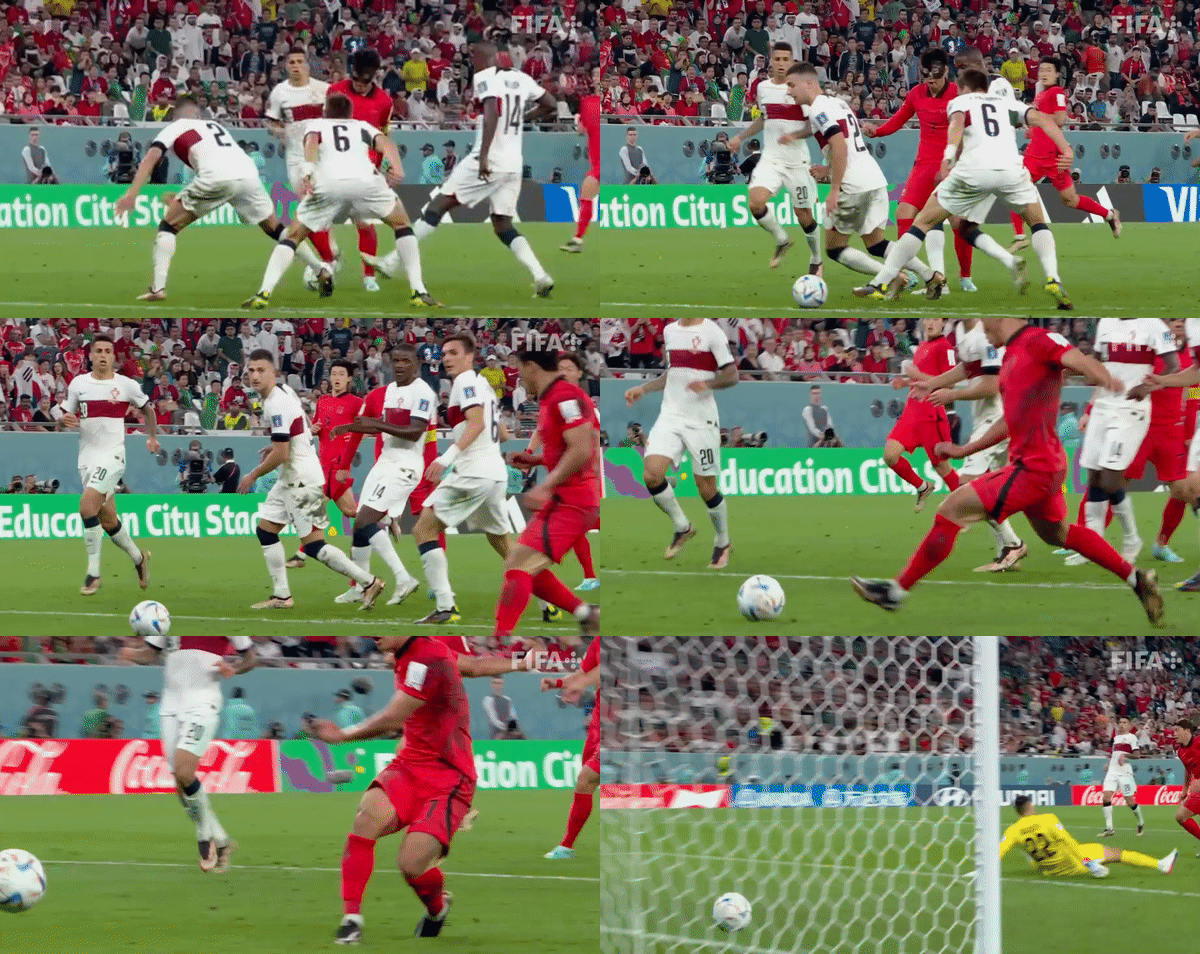
Developing players with world class creativity may be contributing directly to Korea’s inability to win. The second last goal they scored in the tournament came on a dazzling, legendary assist from Son Heung-min. But Son’s rise to prominence is not the typical story of development for the Taeguk Warriors.
While the best in the world are actively promoting creativity, factors outside of soccer may be inadvertently stifling it in Korea.
 Joel Cressman