A Culture of Specialists: The Cold War politics that created a nation of one sport athletes

I stumbled upon the culture of specialists years ago while working on a research project at work.  

I was researching the top 100 golfers in the world. My task was to examine the current best players in the world and find the age they made the tour, then the age they won their first event. 

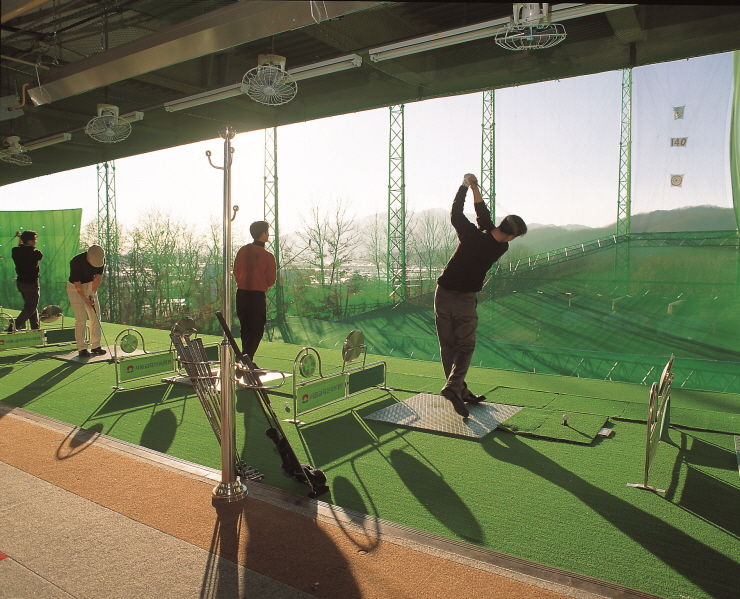
The female side was particularly unusual. It was dominated by South Korea. The country was a super feeder for women’s golf talent, but had few golf courses and little history of golfing. Something different was happening there. 

I dug into books like The Talent Code and The Gold Mine Effect to see what was going on. I found that most young golfers, without any experience, were diving into the sport with intensity. It immediately became their life’s focus. They became specialized golfers. 

The books provided some answers on training, but the why was still left unanswered. Yes, these young women trained hard, but why were they dedicating their lives to golf?

A Contradiction
Source: Naeil LMC

South Korea later became a part of my life when I moved there to teach. I started to get a first hand look at the culture that created these laser-focused, highly skilled athletes. 

I was the PE teacher and Athletic Director at a small private school outside of Seoul. The first thing that blew me away was the level of motor skills of my students. 

Many young people were years behind in their skills. I was often working on basic throwing and catching. It was a struggle for some to serve a badminton birdie because their coordination was so limited. I’d have to adapt elementary focused lessons for high school. 

I also faced an odd resistance getting students involved in after-school sports. New students and parents coming from the public school system were often confused by the system. 

It was new to them that I was trying to get students to play volleyball, basketball, or soccer for just the season. There was a lot of hesitation that it would interfere with their studying. 

Why was this all happening?

My curiosity overtook me. I started diving into the history and science of skill development. All the free time of the pandemic put me into overdrive. It resulted in the manuscript of a book. 

Here’s the story of how Korea turned into one of the most specialized nations in the world.
Source: Old Tokyo

The Cold War Politics That Created Specialization

Sport specialization is year-round training in one particular sport for young athletes. The concern is not older teens and adults focusing on one area: it is children. Particularly children that have not reached adolescence yet.

Single-sport specialization began in Eastern Europe during the height of the Cold War. As the ideological battle between communism and capitalism raged, countries like the Soviet Union and East Germany used sport as a battleground for soft power in international events. 

Communist nations first targeted gymnastics, swimming and diving. They would go into elementary schools to select young talents then pull them into national programs.1

The success of these programs lead to more early identification programs across the world. One country that was a disciple was South Korea.

“Specialization in a single sport leads to success for few and physical inactivity for many.”1

Sport in South Korea – very understandably – was in shambles following the Korean War. South Korea was one of the poorest nations in the world and was in survival mode. 

Things began to shift when General Park Chung-hee seized power in the 1960s. Park, an authoritarian leader that focused on nation-building over human rights, first wanted to use sport to improve physique and public morale. However, the Park regime silently began to admire what the Soviets and East Germans were doing.2

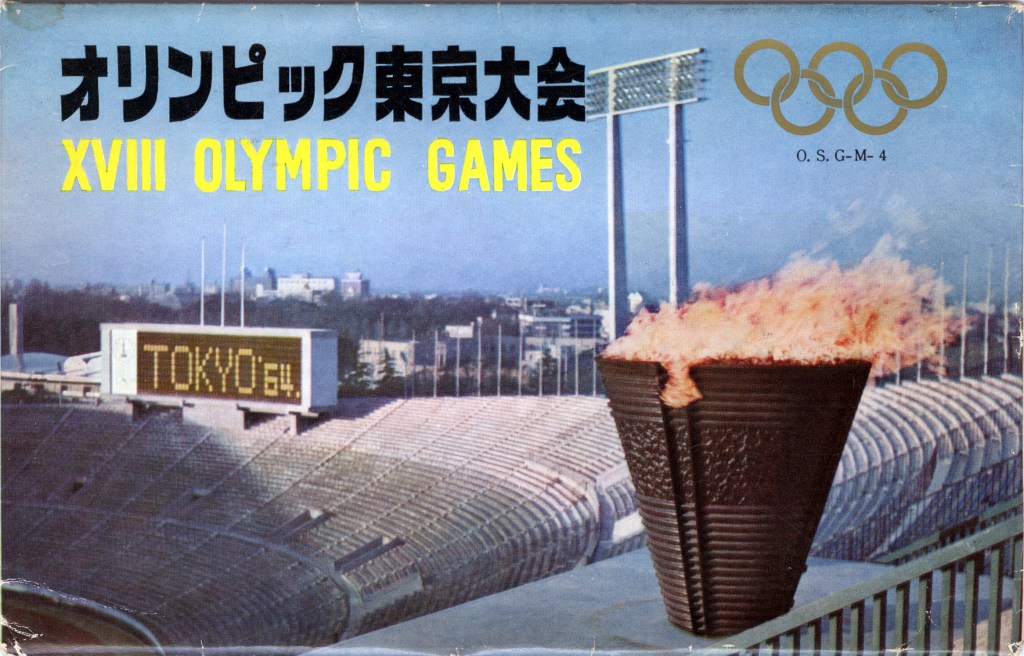
The 1964 Tokyo Olympics were the turning point. South Korea sent 165 athletes to Tokyo and brought home only two silver and one bronze medal. The Park regime considered it a national embarrassment. Regional foes in former colonizer Japan and ideological opposite North Korea were pulling ahead. Something had to change. 

Park’s regime then pulled a covert paradoxical move: The fiercely capitalist nation went to communist nations for ideas.2
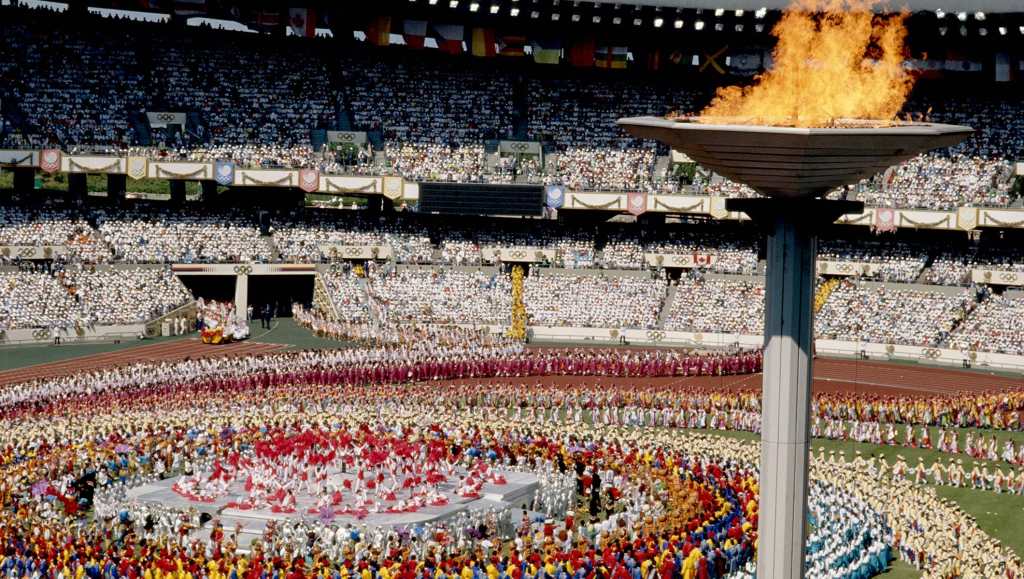
The 1988 Seoul Olympics became the end goal for youth development (Source: Olympics.com)

The Athletic Specialist System

Schools became the heart of how the Korean government planned to win more medals on the international stage. 

The Athletic Specialist System was a program developed in 1972. It aimed to develop young athletes by having them focus on their sports for long and intense hours. Athletes often lived in dorms on campus and bypassed school work to focus on practicing. 

The specialist system first caused a wedge between athletes and studying. In the famously competitive academic atmosphere of Korea, it created one ingenious rule: Athletes could gain entrance to university on winning in their sport, without factoring in any academic results.

The Athletic Specialist System created a division between sports and the regular student. It now defines development.

This system went into overdrive ahead of the 1988 Seoul Olympic Games. The authoritarian regime, now led by President Chun Duh-hwan, wanted to use the Olympics as Korea’s arrival party to the world stage. Gold medals were key to this. 

Physical Education high schools were created to focus on less popular sports. Sports like judo, shooting, and wrestling were targeted to give athletes a realistic shot at success.2

This is how sports developed for years. They became a one-track focus that was pursued at all cost. Athletes literally lived and breathed their sports. Winning was heavily incentivized. 
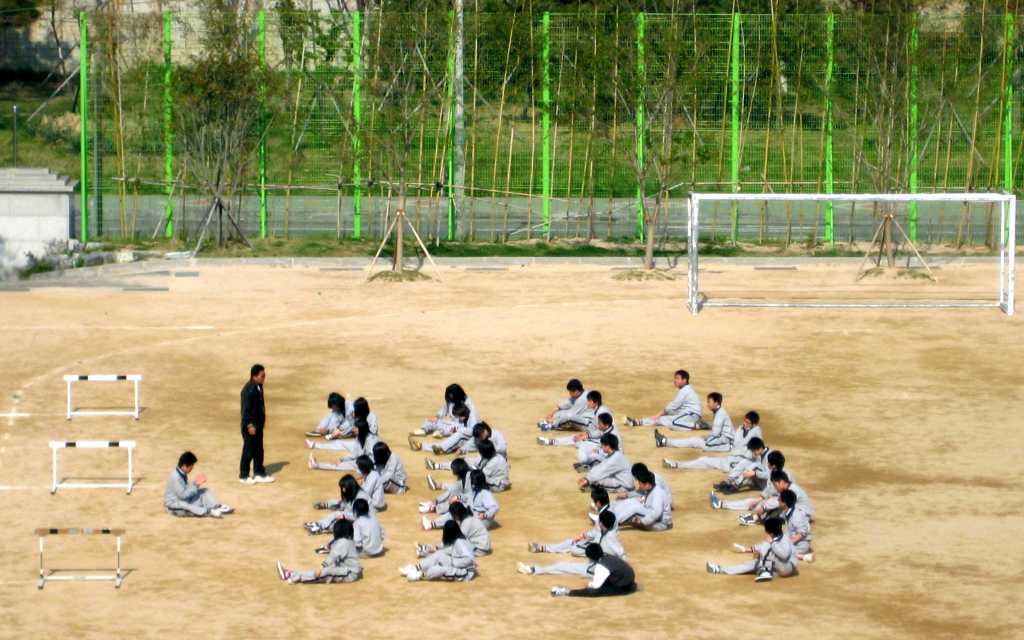
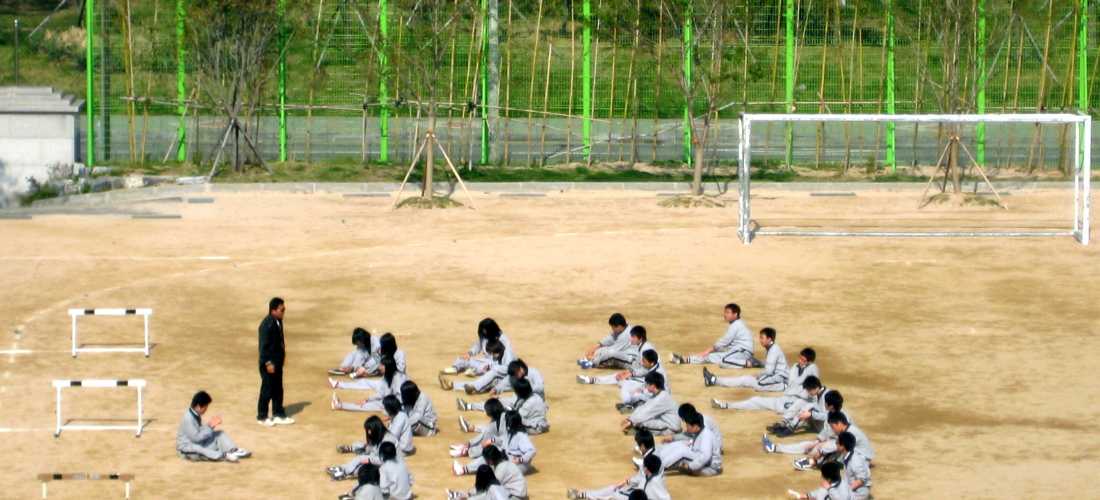
A Physical Education focused middle school (Source: Wikimedia Commons)

A Preview for the World

Sport specialization is the ultimate short-term thinking. 

It is ineffective for overall motor skill development and unhealthy at its worst. Specializing in one area, like only playing golf for your entire youth, stunts your skill learning. Since you are only focusing on one movement, you don’t learn how to move efficiently in other areas. 

Even worse, specialized young athletes are at risk of more soft tissue injuries, nutritional disorders, and burnout. Specializing can even cause heart problems in young people.1 

We are faced with a worldwide conundrum now: An increased number of parents and children around the world are now specializing because they believe it is the key to success. Families are motivated by prestigious university scholarships and lucrative pro contracts. 

Why? They are concerned about falling behind. Success is a powerful driver. While Western countries are arriving at this idea now, Korea has been here for years. The result: the success of few, the inactivity of many.

Sources:

1) Mostafavifar, A.M., Best, T.M., & Myer, G.D. (2012, December 12). Early sport specialization, does it lead to long-term problems? British Journal of Sports Medicine, 0, 1-2. Retrieved from https://pdfs.semanticscholar.org/461f/1eb58d368588976206936863f615b11cc836.pdf.

2) Park, J.W. (2011, Feb.). Elite sport development in South Korea: An analysis of policy change in the sports of athletics, archery and baseball (Doctoral thesis). Loughborough University, Loughborough, UK.
Why Korea? The story of the unlikely talent hotbed

South Korea is not a country usually associated with world class athletes. It is especially not a country that is thought of as one of the world’s leading talent hotbeds. 

The nation does not develop high-end talent in a major sport. Korea does not rival the levels of game-changing stars produced by Brazil in soccer, America in basketball, Canada in hockey, or the Dominican Republic in baseball. 

Instead, Korean athletes have cornered their share of niche, specialty sports and absolutely blown the competition away. 

Within these pockets of carefully selected sports, athletes from Korea have found this peculiar level of dominance that continues generation after generation. 

Why? South Korean athletes have an unrelenting ability to focus on improving in one sport. The roots of that phenomenon all started from Cold War politics.

Source: Inside the Games

Situational Dominance

Korean athletes have an idiosyncratic level of success in very specific individual sports. 

South Korean female golfers have dominated the top 100 rankings on the LPGA for the last twenty years. At any given time, 30 of the top 100 golfers will be Korean, with women like Park Inbee, Ko Jinyoung, and Chun In-gee routinely winning major tournaments. 

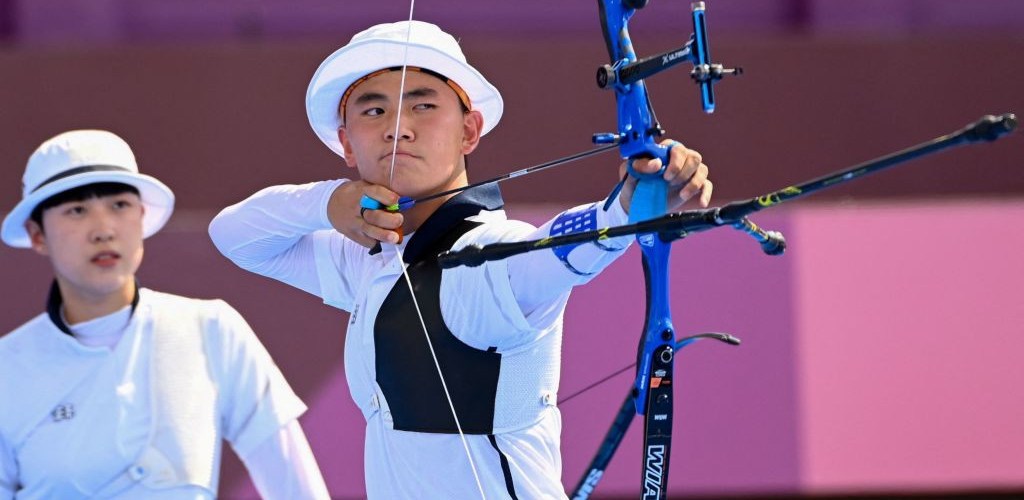
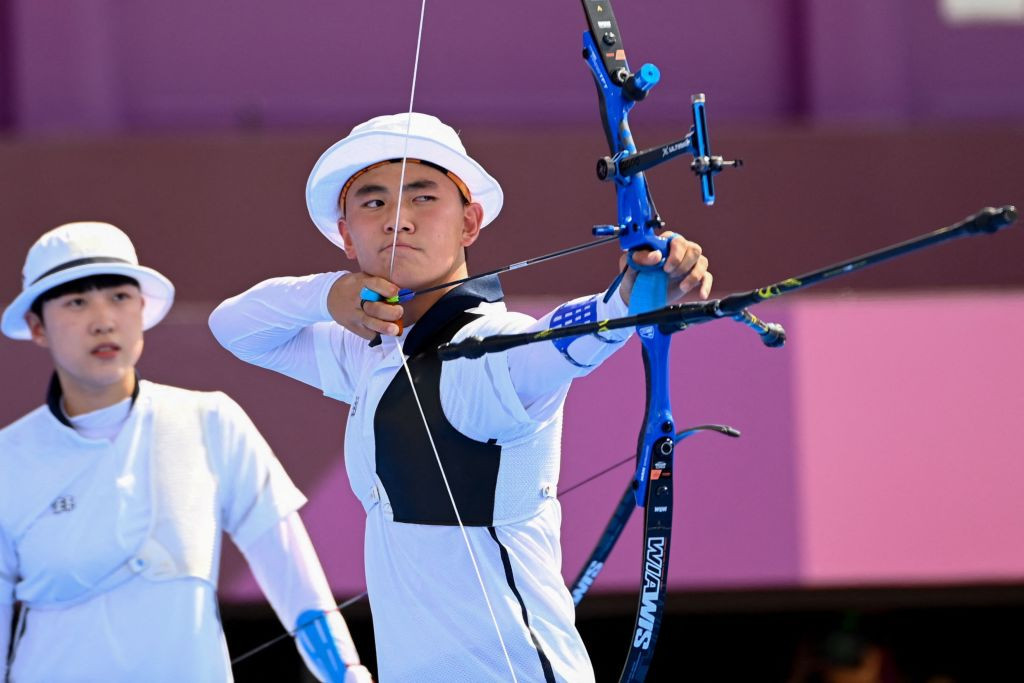
Modern Olympic archery has been absolutely ruled by South Korea. Korean archers have won 27 out of 39 gold medals since 1984. Men’s archers have won every gold medal in the team event but one since the 2000 Sydney Olympics. The women have won every gold medal available but one in the last ten Olympic competitions. 

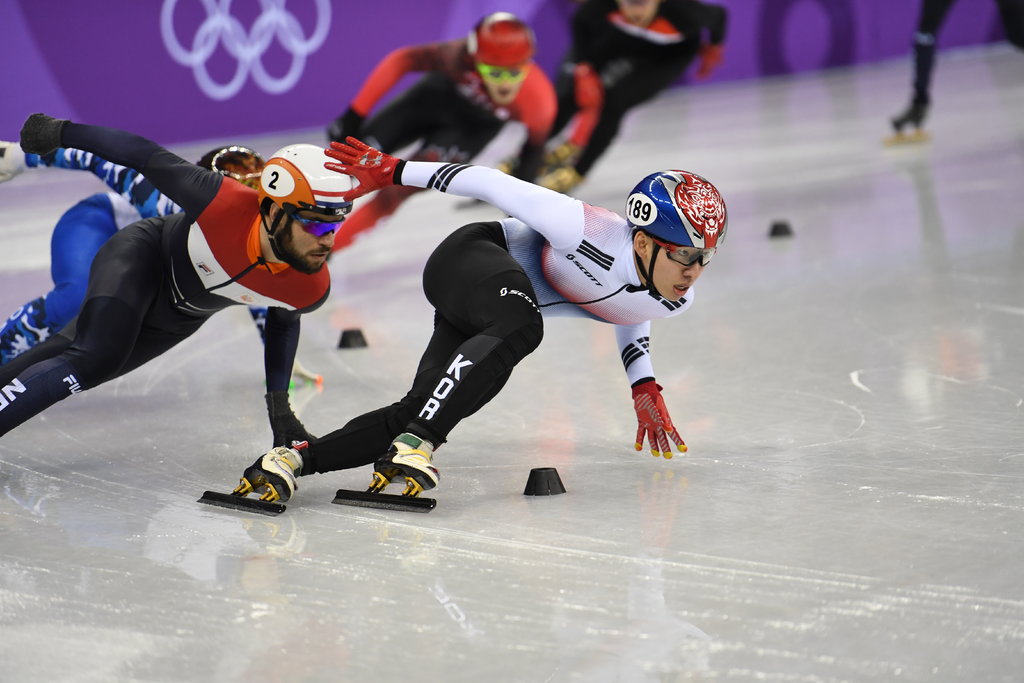
Short track speed skating is the same story. South Korea has been the medal leaders since the sport’s inception, routinely crushing larger regional rivals China and Japan. They’ve won the most medals at seven of nine Olympics that short track has been featured. Athletes routinely only get to compete at one or two Olympics games because internal competition is so high.  

The same narrative is true for sports like shooting, breakdancing, taekwondo, judo, and esports. South Korea routinely ranks in the top 10 for medals won in the Summer and Winter Olympics. 

Often success is found in individual sports and often it just takes one champion to change the landscape.

Source: The New York Times

One Spark of Inspiration

The exact moment that Korea became the mecca of women’s golf talent can be traced back to one infamous tournament. 

It was the summer of 1998. A young and upcoming golfer named Pak Se-ri was fighting for the US Open title. Pak entered the final round in first place but was battling to keep the lead against American college student Jenny Chuasiriporn. 

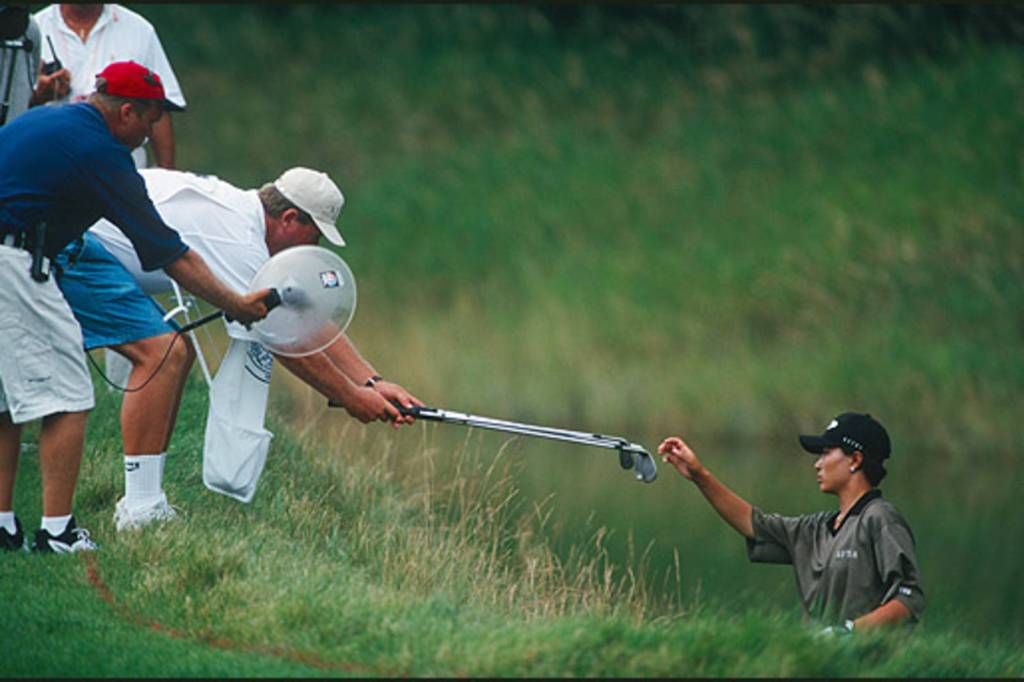
Disaster struck on the back nine. Pak hit an errant tee shot that landed at the edge of a pond and put her victory in doubt. Pak and her caddy walked up to a ball slightly submerged in water and debated taking a penalty stroke that would likely push her out of the lead. 

Pak instead decided to gamble. She ripped her socks off, planted her feet in the pond water, and fearlessly ripped a shot back to safety. She later won in a playoff. 

At the time of her win, Pak was the only competitive Korean golfer in the LPGA. Just five years later, there were 20 of her compatriots in the top 100 rankings. Ten years later, there were 30. 

Pak’s 1998 US Open win became an immediate media sensation back in her home country. The barefoot shot was replayed over and over for years on TV. She became a national icon and publicly carved a pathway to success for young girls to emulate. 

Every sport that is wildly successful in South Korea follows this pathway: dramatic victory, national attention, hordes of young athletes join the sport. It happened when a teenager won an international competition in archery in the 1980s. It happened when a Korean speed skater won a gold medal in the sport’s first Olympics. 

The immediate, intense response of a high-profile international victory inspires young athletes to seriously pursue a sport. But the system waiting to nurture their talent is wildly different than most others in the world.

Pak Se-ri entering the pond for the barefoot shot (Source: USGA)

Finding a Lane of Excellency

The fact that South Korean athletes find this level of excellence in sports is an anomaly. 

Children in South Korea are infamously dedicated to academics. This time spent on studying directly leads to inactivity. Of the 48 OECD countries, South Korean students spend the most time studying. A quarter of older students put in over 60 hours a week. 

The amount of time spent studying takes directly away from physical activity. Less than half of students play any form of sport before or after school, ranking at the bottom of the OECD. Korean children also play outside much less: they average 34 minutes outside a day compared to just under two hours for American children

So how are athletes reaching this level of success?

It is because sport is often about finding a lane for excellency, not about participation and experience. 

Much of this came from deliberate governmental decisions. Starting in the 1960s, the South Korean government began to support elite sport as a method to build their national image. The autocratic government of the era saw sport as a tool to gain an advantage during the Cold War era. Sport became a vehicle to inspire the nation and build prestige, culminating in hosting the 1988 Seoul Summer Olympics.1

Sport became about focusing on elite and producing results. The process became known as the ‘Athletic Specialist System.’ A series of sport-specific schools opened to allow students to train full-time. At these schools, students live in dorms under the supervision of the coach. These programs focus less on academics because the outside competition to get into good universities is just too tough. School sport focuses on winning at every level, causing what has been labelled a ‘win-at-all-costs’ culture.2

Sports like archery, short track speedskating, taekwondo, or judo all rely on this talent pipeline for future gold medal winners. 

Many young athletes pursue this specialized pathway. They fully dedicate themselves to sport while putting academics secondary. As with other countries, the results are still grim: Only 1% of athletes make it to the professional level.

Source: Ha, J.P., Lee, K., & Ok, G. (2015). From development of sport to development through sport: A paradigm shift for sport development in South Korea. The International Journal of the History of Sport, 32(10), 1262-1278. DOI: 10.1080/09523367.2015.1062756.

The Reverse Pathway

The process of specializing in one sport is by no-means a Korea-specific issue. In fact, it is a growing issue in all developed countries around the world. 

The issue is that it has created a process of a ‘reverse pathway’ for developing athletes.  

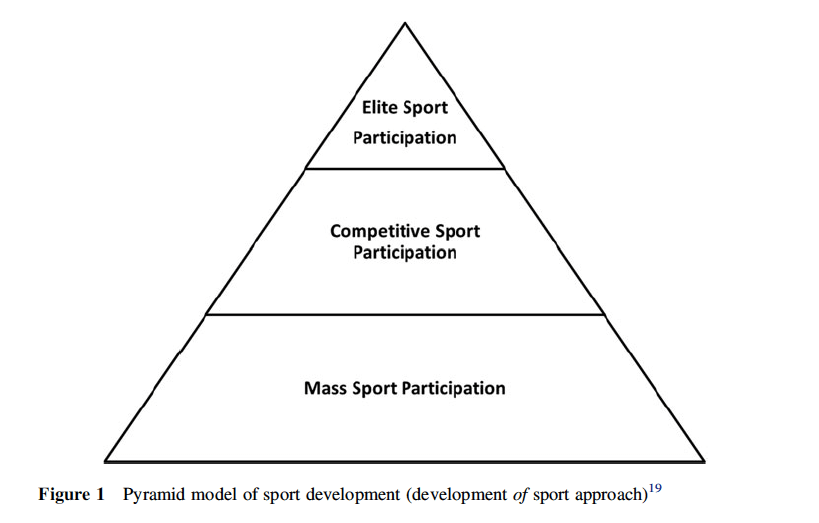
Most nations – especially most talent hotbeds – have a large base of young athletes playing for fun. Young people play soccer or t-ball to get moving as young children. They join martial arts to learn something new. The sport becomes a passion they play informally on the street. Kids often sample different sports and play in set seasons, switching once the season is done. This has been the typical grassroots sports model, especially in North America. 

What makes South Korea unique is that this concept of grassroot sports does not exist. Young children do sample different sports, but it becomes about dedication to one venture. An athlete should get on the elite pathway or quit. There are few recreational options. 

Instead of the best amateurs and participants emerging from the crowd, early selection is done and those sports become a serious pursuit. Elite sport determines development, participation in sport does not.

“While most other countries have a large amateur base and work towards elite performance, Korea is the opposite. It has an exceptional elite performance system, but almost no grassroots at all.”

-John Stanley on Archery

The process of a ‘reverse pathway’ creates results and champions with astounding success. It is also a significant handicap to developing talent in some of the world’s biggest sports. There are also rights violations and a lack of other options for athletes along this path. 

It is a process that as a Physical Education teacher and coach in Korea, I find endlessly fascinating. Follow along here as I take a deeper dive into these topics to share stories of the athletes and the environment that nurtures their talent.


Sources:

(1) Ha, J.P., Lee, K., & Ok, G. (2015). From development of sport to development through sport: A paradigm shift for sport development in South Korea. The International Journal of the History of Sport, 32(10), 1262-1278. DOI: 10.1080/09523367.2015.1062756.

(2) Kang, S.W., Jeon, H.S., Kwon, S.H., & Park, S.H. (2015). Parental attachment as a mediator between parental social support and self-esteem as perceived by Korean sports middle and high school athletes’. Perceptual & Motor Skills: Physical Development & Measurement, 120(1), 288-303.