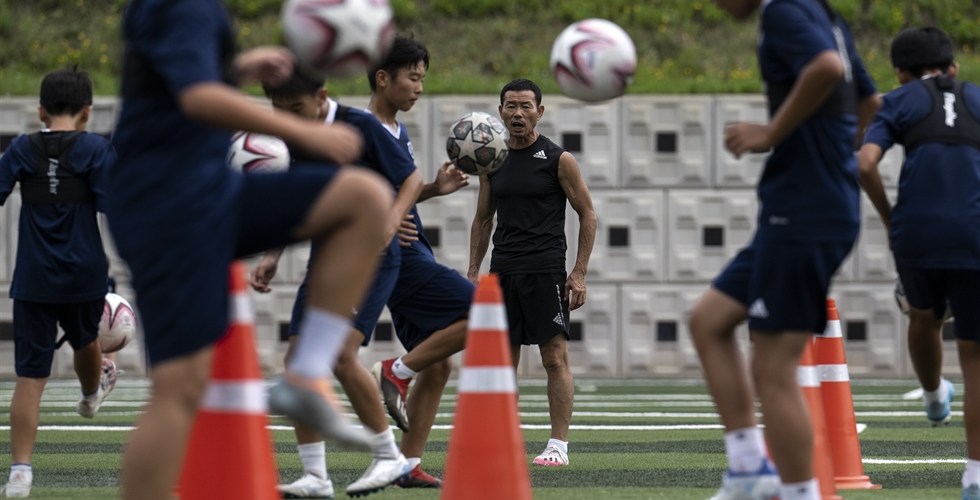
Throughout the pandemic I researched a book project that examined the culture of elite sports in Korea. One of the most interesting areas of research I came across was the process of learning for East Asian students.
This was for a couple reasons. One, my classes at my school are almost entirely students of Korean origin. Two, the mentality towards the method of learning among Asian students seems to always be distinctly negative.
There is a stereotype–even among educators that live and teach in Asia–that East Asian students are passive, focus little on exploration, and only rote memorize content.
I found one refreshing book that challenged that. The Drive to Learn by Dr. Cornelius Grove is a fascinating comparison of the American approach to learning compared to the approach to learning in China, Japan, and Korea.
Here are some thought-provoking main ideas that challenged my bias and made me a better teacher:

The Process to Mastery
I coach volleyball in the fall season. It’s a sport that I stumbled into coaching six years ago, but fell in love with. Especially at the high school level. Since I didn’t play at a high level, I’ve had to spend hours researching the best teaching and coaching practices for the sport.
There’s always been one practice method that I’ve constantly had to battle every year: hitting lines. Every group that I’ve taught, boys and girls from the middle school to varsity level, love to practice hitting a volleyball one-by-one, with no blockers, waiting in a line. You can set your watch to it if there is a moment’s dead time at practice.
Groups will line-up behind the attack line, toss a perfect ball to the setter, then wait for the perfect set, often catching it if it is not to their liking.
It drives me crazy. It’s unopposed, blocked practice that will have limited transfer to the game. I’ve tried teaching alternatives. I’ve explained the skill transfer and that they need to practice hitting in a more realistic environment. I’ve tried outright banning it, but each group always defaults back to it.
However, our conflicting opinions may just be a difference in the way my group of students and I view reaching mastery.
The process to mastery for East Asian students follows this process:
- Repetition
- Understanding
- Application
- Modification
For other subjects, this makes learning inside and outside the classroom of equal importance in the Asian context. Classrooms are typically considered the area to deliver material. It is why the “passive” stereotype exists. Students aren’t expected to be active contributors when material is delivered.
Outside the classroom, students take time to review, practice, and personalize the learning. The belief that East Asian students only memorize is a myth: they are just taking the first step towards learning. Application and modification comes later.
For my volleyball players, this is the process they are going through. To feel like they can apply hitting in the game, they want to repeat the proper form over and over. Skill acquisition science doesn’t support this idea, but it is one that is embedded in them.
The best thing I can do as a coach is first acknowledge this process, but explain and show how this may not translate best to the game.
Focusing on Failure
Research found that East Asian students focus less on success and more on failure. This happens for one primary reason: feedback.
Success does not provide feedback for future learning and application. Instead, it leaves future growth more at risk. “In East Asia, an individual’s ultimate goal is self-improvement,” Grove writes.
There are key differences with Western countries here. Research found success gets more focus than failure in America. North Americans also believe that babies are born with a fixed set of abilities. It becomes a parent’s job to discover and support the growth of those abilities.
East Asians differ significantly in their approach to parenting. Failure is not seen as a weakness of the child. All children are believed to be flexible in their abilities and capable of learning anything. Effort is perceived as the primary factor for determining if a student effectively learns a subject, not inborn ability.
The goal for East Asian students is “high learning mastery” while the goal for Americans is “high learning performance.”
Students in the East tend to focus on self-improvement in areas they deem important, while students in the West focus on self-enhancement, or getting better at what they already are good at.
The practical differences to these are vast. East Asian students are willing to spend much more time and resources in their studies because they feel motivated by chasing mastery. Students in North America are more likely to go through a sampling phase to try to find a match with what they are naturally good at.

Rethinking Motivation
The difference in the approach to “high learning mastery” to “high learning performance” is a clash that I now think of daily.
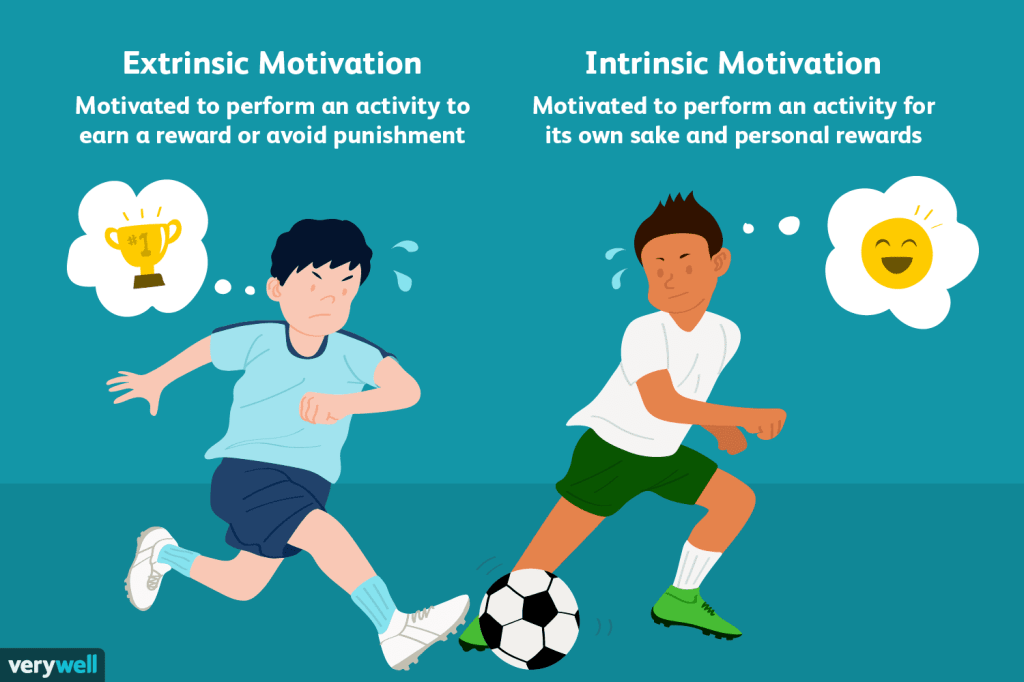
As an educator, I hold the belief that motivation should ideally always be intrinsic – it should come from the student instead of any outside, possibly controlling source. When a student makes the choice themselves and is given autonomy, it is always better.
This is on par with how American parents see themselves.
Research found that American parents believe it is their job to bring out interests and abilities that are inborn in the child. They do not feel it is appropriate to direct their children towards a task.
East Asian parents, however, see their children as changeable and capable in many areas. They believe that they should take a more active manager role and guide their children. Development of their children becomes more hands-on and supervised.
In the West, we deride this parenting style. We refer to it as “Tiger Parenting” and see the child as the victim of control and coercion. Western parents tend to view children as more fragile and to be handled with care.
That may not be the case with all students though.
Chinese children were found to view this hands-on parenting style as a sign of warmth and devotion. Similar results were found with Korean children. Taking an active role in their life was how children perceived their parents loved them.
This concept also sees a clash for intrinsic motivation. Western educators, like myself, tend to believe that motivation is always higher when the child makes the choice.
However, a study found that East Asian American students aged 7-9 worked the hardest when their mom made a choice for them. Anglo American students worked the hardest when they made the choice.
For East Asian students, motivation to please others can be a powerful driver. Especially when it comes from family.
Reading The Drive to Learn has been a fascinating process for me. It has provided me with a whole new door of research to open up and to challenge my bias as I teach daily.
Working in an international school, it’s also been interesting to see the spectrum that exists among my student population. There are Western students, students that arrive fresh from Korean public school, or those that fall somewhere in between.
Korean students that have been there since elementary or spent years abroad can often have a more Western view of education, but still face the extrinsic pressures of family and pressure for good results. They may not even be aware that this cultural clash is happening at their age.
For me, this is an everyday reminder to not jump to conclusions about the need to repeat and work on form. It may just be what students feel they need to improve.
 Joel Cressman